
Returning to Reading: A Journey
Looking back to 2017, I found myself in a bit of a career fog. I’d spent almost a decade climbing the marketing ladder, only to find that the higher I went, the less I enjoyed the view. The creative spark that had first drawn me to the industry, the buzz of branding, the art of campaigns and storytelling, was slowly being buried beneath analytics, charts, metrics, and spreadsheets. Somewhere along the way, ‘marketing’ had turned into ‘digital data management’, and I couldn’t shake the feeling that I’d lost myself.
Around the same time, I was exploring the realm of self-development and was advised to rekindle some of my past interests and passions, with a view to potentially integrating them into my career. I wanted less inertia and more intention, and as I looked inward, I kept revisiting my childhood interest in creative writing and connecting it with the copywriting parts of my marketing roles. That spark slowly reignited the idea of writing for myself in some capacity, maybe even freelancing.

But there was a problem. Like many of us in the smartphone era, my attention span had been hijacked. My evenings were consumed by apps and endless scrolling, and one day it hit me: I hadn’t read a complete book in five years. Half a decade! For someone who had grown up reading, that realisation was sobering. I’d lost touch with the relaxing pleasure of turning a page, of being immersed in a story instead of a feed.
So, I decided to make a change. If I wanted to write again, I needed to read again. It took a few false starts, a book abandoned halfway, and a few dutiful skims, but then a colleague handed me a story that she thought I might enjoy. That one particular red-covered book immediately captivated my attention and rekindled my zest for reading, setting me back on a track that I barely realised I’d been derailed from.
Since then, I’ve approached reading with a new openness. No rigid lists or pretentious “must-reads”. I let the books find me. Recommendations from travel mates, dog-eared novels at a relative’s house, something left behind in a hotel or a title or cover that inexplicably caught my eye in a second-hand shop, each book seeming to arrive with intent.
Taking the slow approach
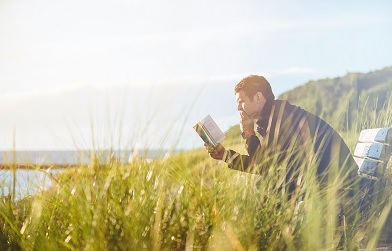
Now, I should confess: I’m not a fast reader. More book-sloth than book-worm. I take my time, appreciate every line, and have been known to reread entire chapters just to make sure I haven’t missed a minor nuance. It can take me weeks to finish a book, and I’ve made peace with that. Reading isn’t a race, and I’m not concerned by how many books other people read or how quickly they do it; those metrics ruin the magic. For me, it’s about curiosity, escapism, and growth.
At first, I was a physical book stickler. There’s something about holding a well-worn paperback, feeling the weight of the story in your hand, and I like to wonder how many lives a book has quietly passed through. During the 2020 pandemic, however, I caved and downloaded my first e-book (1984 by George Orwell, fittingly), and since then I’ve learned to appreciate the convenience of digital reading. But, still, if I had to choose, I’ll forever be a fan of the tangible.
As for what I look for in a compelling story? My tastes are kind of niche. People mostly know me for my Sagittarius qualities – my adventurous, independent, and freedom-loving side. But around the same time that I began reading again, I took the famous Myers-Briggs-based 16 Personalities online test and repeatedly tested as an INFJ personality type – described as introverted, idealistic, and seeking meaning. Taking into account these various facets has helped me understand myself and why I connect with the books that I do.
I tend to gravitate toward the overlooked, the misunderstood, and the fringe. Strong, layered characters appeal to me – ordinary champions, antiheroes, and underdogs alike – and unusual and inspirational tales that transport me to distant lands. One minute I’m a hopeless romantic; the next, an unapologetic realist. I like well-crafted narratives yet also embrace the complexity of unresolved mysteries, and I like contradictions; they keep things interesting.
If there’s one thing that frustrates me, it’s when a book starts strong but fizzles out in the final chapters – as if the author ran out of time or was pushed to meet a deadline. It happens more often than it should, and it’s a shame, because when storytelling is done right, books have a power that few other art forms do; the power to provoke, challenge, and change the world.
Since I rediscovered reading, I’ve encountered various characters, genres, styles, and topics. From self-help to non-fiction, fantasy sci-fi to classic lit, each story has helped shape each of the chapters that they accompanied; always a book in my possession, silently keeping me company through all of life’s twists and turns.
So, after several years of thinking about this post, I’ve put together a list of some of my favourite books that I’ve discovered on this reading odyssey; each one is special to me for one reason or another, standing out from the crowd. Some of them were with me during long layovers, sometimes read kerbside during a wait for transit, but more often than not on a cosy night wherever was called home.
While some of my favourites have changed with time, others have stayed unshakably firm. But together they are a collection of moments, lessons, and spectacle and tell the story of how I rediscovered the joy of reading. So let’s get down to it and look at some of the most memorable and touching books I’ve encountered so far in my 10 Inspirational Reads.
10. One Hundred Years of Solitude (Gabriel García Márquez, 1967)
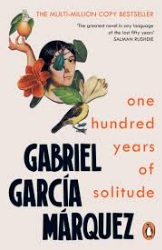
A masterwork of mysterious realism, One Hundred Years of Solitude follows the Buendía family through several generations in the mythical north-Colombian town of Macondo. It’s a dizzying swirl of love, loss, and history repeating itself. A colleague first recommended it to me, and having lived in Latin America, I connected with its depictions of surreal beauty with melancholic undertones. I occasionally had to retrace the family trees to keep up with the dreamlike style, but that confusion turned out to be part of the allure. When I finally visited Colombia last year, I wasn’t surprised to see Márquez’s legacy prominently celebrated, including a giant airport display at Bogotá arrivals. Bittersweet and poignant, the novel’s paradoxes of love and solitude, memory and fate played on my mind for some time after I’d turned the final page.
9. The Bone People (Keri Hulme, 1984)
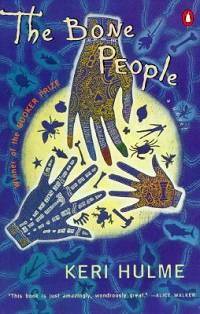
The Bone People is a Booker Prize-winning novel that I discovered while living in a house-share overseas; it was one of only three English language books on a shelf in the corner of the living room, and when I noted that the novel was published in 1984 (the same year that I was born), I knew I had to read it.
Set against the rugged backdrop of New Zealand’s South Island, The Bone People narrates the story of Kerewin, an artist in exile, and the unfolding events following her encounter with Simon, a speechless boy, and his foster father, Joe. The novel explores themes of connection, culture, and the hidden wounds that individuals bury. Its peculiar mixture of English and Māori, along with the inclusion of untranslated phrases, presents a challenging yet enriching reading experience.
The novel resonated with me as it mirrored a chapter of my life when I, like Kerewin, was also discovering new connections after a spell of isolation. Due to everything that was happening at the time, I took almost half a year to finish this book, and by the end, it felt like I’d read a story and lived a similar one: authentic, destined, and unexpected.
8. I May Be Wrong (Björn Natthiko Lindeblad, 2022)
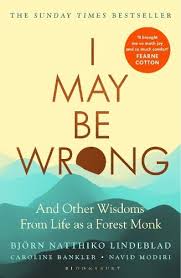
A delicate and detailed personal account of his time as a forest monk, I May Be Wrong, by Björn Natthiko Lindeblad, is a curious and enlightening read that shares nuggets of wisdom learned from an unconventional lifetime. Lindeblad began his adult life as a successful businessman in Sweden but made a sudden and drastic change in direction, following what he describes as an ‘intuition hit’. This pivotal moment set him on a twenty-year journey of self-discovery and enlightenment, during which he progressed through the ranks of the Buddhist monks in the jungles of Thailand. Key themes in the memoir include the importance of being present and the necessity to relinquish control and expectations in life. A like-minded friend recommended this book to me, and, although I found some parts to be slightly privileged, I enjoyed reading from the perspective of someone who has lived a life that many might find difficult to comprehend, and I have since tried to carry some of the lessons from the book into my life.
7. Nicolo’s Gifts (Neil Ayres, 2003)
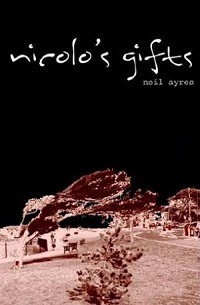
I stumbled upon Nicolo’s Gifts on a shelf in a hotel reception in Central America; it’s an obscure British novel written by a 23-year-old and published by a now defunct Bristol indie house. Instantly intrigued, I dived in.
The story follows the progression of the relationship between protagonists Nicolo and Sandra with several parallel storylines that veer from mundane to mysterious and joyous to tragic. The book is complex, poetic, and unconventional, blending folklore, philosophy, and the chaos of thought via a well-drawn host of real human characters. At times I was lost in its slightly pretentious metaphors, but the incredible writing had a richness and texture that felt almost hypnotic.
Knowing it had been independently published over two decades ago and by a largely unknown author who was seemingly talented and wise beyond his years made it feel like a secret worth guarding. It confuses me that brilliant works like this vanish in obscurity while mediocrity fills the supermarket shelves. Discovering Nicolo’s Gifts was fated serendipity, and one day, I plan to pass that magic on by leaving it somewhere for another reader to find.
6. Like Water for Chocolate (Laura Esquivel, 1989)
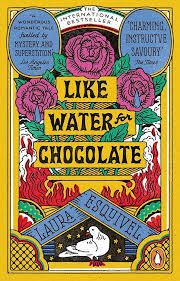
My Play Books app recommendedLike Water for Chocolate to me, a novel by Mexican novelist and screenwriter Laura Esquivel. It is a poignant, gripping, and mystical story that I, for once, managed to finish rapidly, in just a couple of weeks.
Mama Elena De La Garza, a widow, owns the ranch in northern Mexico where the story unfolds during the Mexican Revolution. It revolves around the youngest of her four daughters, Tita, who, by tradition, is bound to sacrifice her life to care for her mother, Elena, and to forgo any dreams of marriage. But her destiny is challenged by the arrival of Pedro and an ensuing, complex love triangle that results in Tita manifesting her inner turmoil in fantastical ways through her cooking.
I enjoyed the story’s vibrant and rich symbolism and magical realism. The unique writing style intricately ties everything together, celebrating traditional Mexican recipes by weaving them through each chapter. The book was a sustained bestseller in Latin America, remaining at the top of reading charts for several years.
5. On Earth We’re Briefly Gorgeous (Ocean Vuong, 2019)
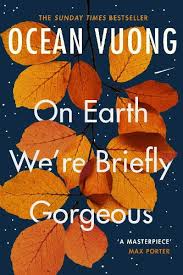
I first heard about this novel through the book club on the Service95 podcast, where pop singer Dua Lipa interviewed its author, Ocean Vuong. His debut novel, On Earth We’re Briefly Gorgeous, is a semi-autobiographical story that follows Little Dog (Vuong’s childhood nickname) as he grows up half-Vietnamese in post-Vietnam War America.
Set in a struggling town on the outskirts of New York, the book traces Little Dog’s passage through young adulthood as he grapples with identity, sexuality, and a first love that feels almost doomed from the start, all against a backdrop of unemployment, drugs, and quiet disillusionment. What makes this novel so striking is its form: it’s written as a deeply poetic letter from son to mother. The narrative slips between past and present, weaving personal memories with the wider consequences of war and migration. At times the shifting timelines can be disorienting, but the language is rich with imagery and metaphors, including the recurring motif of migrating monarch butterflies. Their journey becomes a powerful symbol not just of migration, but of the fragility and fleeting nature of love and existence.
4. The Mastery of Self (Miguel Ruiz Jr., 2016)
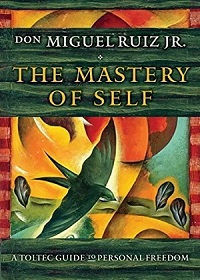
Building on the Toltec teachings of his father, The Mastery of Self offers a simple yet profound roadmap for inner freedom. Don Miguel Ruiz Jr. distils big spiritual truths into accessible wisdom about authenticity, fear, and unconditional love. The book made me rethink how I give and receive love – not as a transaction, but as something boundless and freeing. Despite its brevity (just 152 pages), the book’s depth is not diminished, and each chapter reveals another layer of quiet revelation. As someone who is enthusiastic about personal growth, I found it both grounding and transformative. If I could, I’d put it on every school syllabus, a manual for emotional intelligence and human peace in bite-sized form. If the theme of the book is of interest to you, I’d also recommend his follow-up, The Mastery of Life, which I found just as educating and insightful.
3. The Alchemist (Paulo Coelho, 1988)
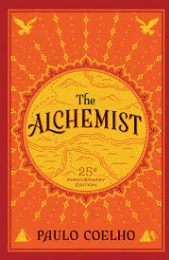
I was recommended The Alchemist by a fellow traveller at a Belize hostel in 2018 in one of those chance conversations that linger. I typed the title of the book into a draft message on my old HTC phone and forgot about it for years. In 2023, when I finally powered up that dusty phone for another reason, there it was, waiting for me, and I took it as a sign. Coelho’s timeless tale of the protagonist Santiago’s quest for meaning seems simple on the surface, but beneath, it is clever and soul-stirring, reminding readers to realise their personal legends and that destiny often lies where we least expect it. I devoured the 25th Anniversary Edition of the book in days, enchanted by the spiritual symbolism, the twists in the tale and the stunningly described landscapes of Andalusia, Spain; the city of Tangier, Morocco; the Sahara Desert; the Al-Fayoum oasis; and the Pyramids of Egypt. It’s the perfect read for anyone searching beyond the superficial, for those chasing not just dreams but also themselves.
2. The Song of Achilles (Madeline Miller, 2011)
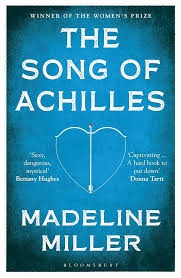
Surprisingly, I only realised in my thirties that I’d never read a novel whose heroes were gay, so I began searching, and I found The Song of Achilles at the top of some recommended reading lists. Madeline Miller’s retelling of The Iliad through Patroclus’s eyes became an instant revelation. It’s passionate, poetic, and drenched in Greek sunlight and mythology. The enduring love between Achilles and Patroclus is tender yet epic, defying convention, gods, and war. I saw fragments of my personal experience within the story: enduring love hidden and fought for. The prose is so vivid it hurts, and yes, I may have shed a tear at the end (a first for me). It’s fable, tragedy, and truth intertwined to shape a memorable story about courage, devotion, and being unapologetically yourself in the face of the most extreme adversaries.
1. Maestra (L.S. Hilton, 2016)
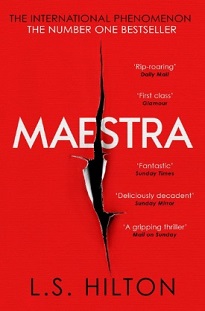
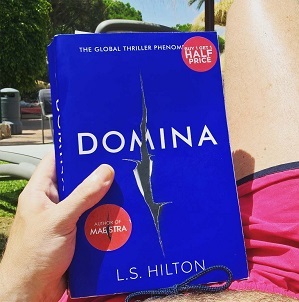
Maestra was that essential novel that was handed to me by a colleague back in 2017 and instantly reignited my love of reading. The book (and both its sequels, Domina and Ultima) follows protagonist Judith Rashleigh, a fiercely intelligent antihero who weaponises wit, sexuality, and survival across Europe’s art scene. An expression of both perfected outward image and shadowy inner workings, the trilogy-spanning story is a seemingly never-ending summer culture tour, stylishly dressed and pulsing with deception, sex, and murder. L.S. Hilton described her protagonist not as a feminist but as the voice of millennial frustration, and it shows.
I adored Judith: Northern but detached, chain-smoking, cunning, and unapologetically ambitious. The series blends glamour, satire, and violence with intoxicating precision, and Judith resonated with the me of that time: bold, curious, and on my own adventure. I’ve wished for a film version ever since I heard that the rights had been purchased by a leading studio, though part of me hopes it never happens. Some stories are too daring for Hollywood to do them justice.
I can remember exactly where I was when I read each of these books. They call back to seasons of my life, the way a favourite scent can transport you back to a moment. A glimpse of a cover or a return to an important chapter is enough to stir the echo of who I was at the time. Some of these stories were therapy, some a sanctuary, and others so entertaining that they’ve left a permanent imprint.
Several of the titles on my list were published since the turn of the millennium, which is a quiet testament to the era I’ve grown up in and the kinds of narratives that speak to me. In an unregulated time when AI can generate a novel in minutes and anyone can become a self-published author at the click of a button, it’s reassuring to know that genuine artistry, craft, and creativity still endure.
In an age shaped by social media noise and the churn of misinformation, the habit of reading feels more essential than ever. To immerse yourself in a book is to practise empathy: to inhabit other lives, expand your vocabulary, sharpen your thinking and encounter perspectives you might otherwise miss. Research continues to link regular reading with improved cognitive function, better sleep, reduced stress and even delayed onset of dementia. But beyond the studies and statistics, reading is also an act of self-care, a quiet rebellion against modern haste.
Here in the UK, we’re fortunate that many councils continue to fund public libraries, and I recently signed up for a membership. My first loan hasn’t quite captured my heart (I’m six weeks in, only halfway through, and feeling the pressure to get it returned), but I’m undeterred. Not every book will become a favourite, and that’s part of the hobby.
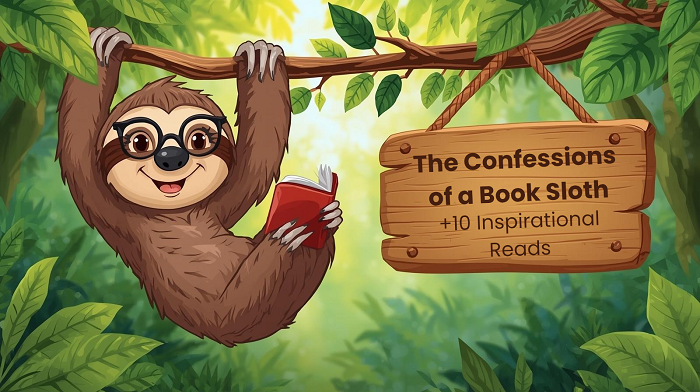
There’s an entire world of stories still waiting, and I intend to meet them steadily, saving my energy for the ones that deserve it, much like how this blog’s namesake gently moves through life. I may never be a burrowing book-worm, but this tree-loving book-sloth has no intention of ending my reading journey anytime soon. After all, speed readers often miss out on the beauty of the experience, and I’m here to hang out and enjoy the view.
Now that you’ve had a glimpse at some of my favourite books, tell me about yours? Have you read any of these titles? Or do you have any essential recommendations? Feel free to enter a fake email address and comment below!


March 27, 2026 -
I love the Alchemist, such a lovely story <3